
Taylor Marie Graham is an award-winning settler-Canadian playwright, librettist, director, theatre scholar, and educator who lives in Cambridge, Ontario / Haldimand Tract. She has an MFA in Creative Writing and a PhD in English and theatre studies from the University of Guelph. She is currently an Assistant Professor at Bishop’s University in Sherbrooke, Quebec. You can find Taylor’s articles in Canadian Theatre Review, Intermission Magazine, Routledge’s Journal of Applied Theatre and Performance, The Conversation, Theatre Research in Canada, Guernica Editions and Canadian Literature. Critics describe her plays and operas as, “arresting and funny” (Slotkin), “uncommonly cool” (MoT), “charmingly twisted” (Toronto Star), “powerful, and courageous,” (OnStage), “meaningful for all ages” (Intermission), “darkly evocative” (Istvan Reviews), “psychological, theological, and ornithological” (Our Theatre Voice), “as moving as it is scary” (My Entertainment World), and “profound, beautifully crafted” (StageDoor). In 2024, her book Cottage Radio & Other Plays: Cottage Radio, White Wedding, & Post Alice was published by Talonbooks and Rosegarden Press published Human Voices Wake Us.
80s & 90s
In the late 1980s and early 1990s, Taylor Marie Graham began writing plays, poetry, and short stories as a child growing up in Southwestern Ontario. She spent her early years splitting her time between the small Lake Huron community of Port Albert, Ontario, on the Huron Tract and Canada’s south-most border city of Windsor, Ontario, on the traditional territory of Three Fires Confederacy of First Nations.
Family members and childhood friends would likely tell you little Taylor was a bit of a weirdo only child who spent a lot of time making up worlds in her head. She loved watching movies and reading everything in sight. She was known to spend a lot of time happily playing by herself or forcing friends and cousins to enact narratives sprung from her brain for hours on end.


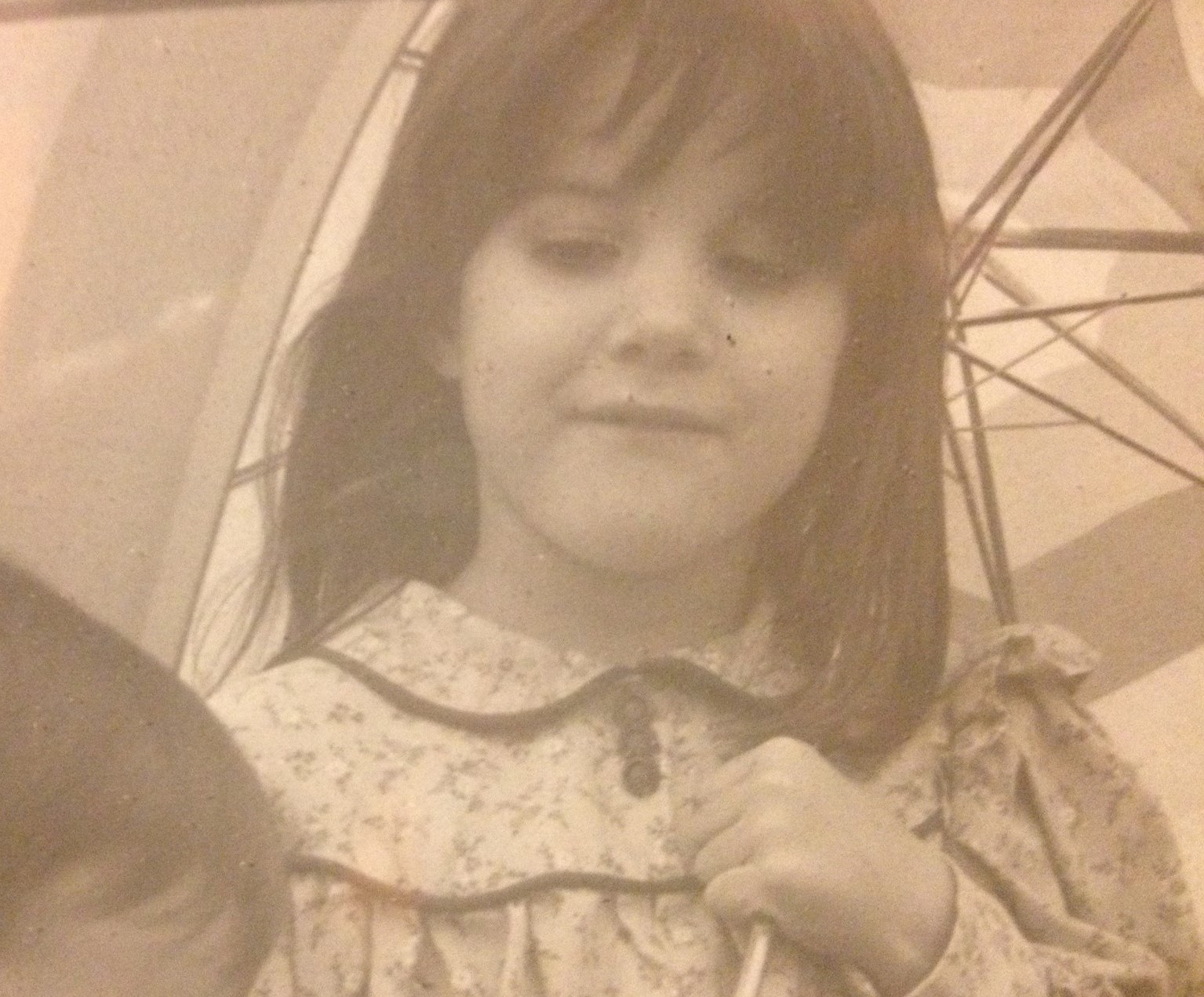

Growing up in Southwestern Ontario has inspired a great deal of Taylor’s writing since that time –particularly the strong, hilarious, and complicated rural women of the region. Her work often also digs into the deeply complex histories and relationships to the land bordering the magnificent great lakes of this area.
2000s
In high school, Taylor moved at high speeds playing every sport, acting in every play, and going to every party. She loved physics, English, and theatre classes. She played travel volleyball, was captain of the high school basketball team, and played rugby in the Ontario Summer Games. She organized coffee houses as the school’s arts and culture minister on the student cabinet and turned every assignment into an opportunity to write a monologue or direct a short film project if she could.
Taylor’s love of telling stories is what brought her to study theatre, specifically playwrighting and directing, at York University in Toronto/Tkaronto in mid-2000s. Living in Toronto meant Taylor could meet folks from cultures previously unfamiliar to her, learn from new perspectives, and see all the live performance the city had to offer. While this time of growth was certainly not all easy, it did allow Taylor to experiment with her aesthetics and soak up new ways of seeing the world.
York Professor Judith Rudakoff helped Taylor establish her voice as a writer in this time and awarded her with the George Ryga Bursary for Excellence in Playwrighting. Rudakoff encouraged her to apply to professional theatres in Toronto. As a result, Taylor participated in summer internships with two highly revered Toronto theatre institutions: the Playwrights Guild of Canada and Theatre Gargantua.

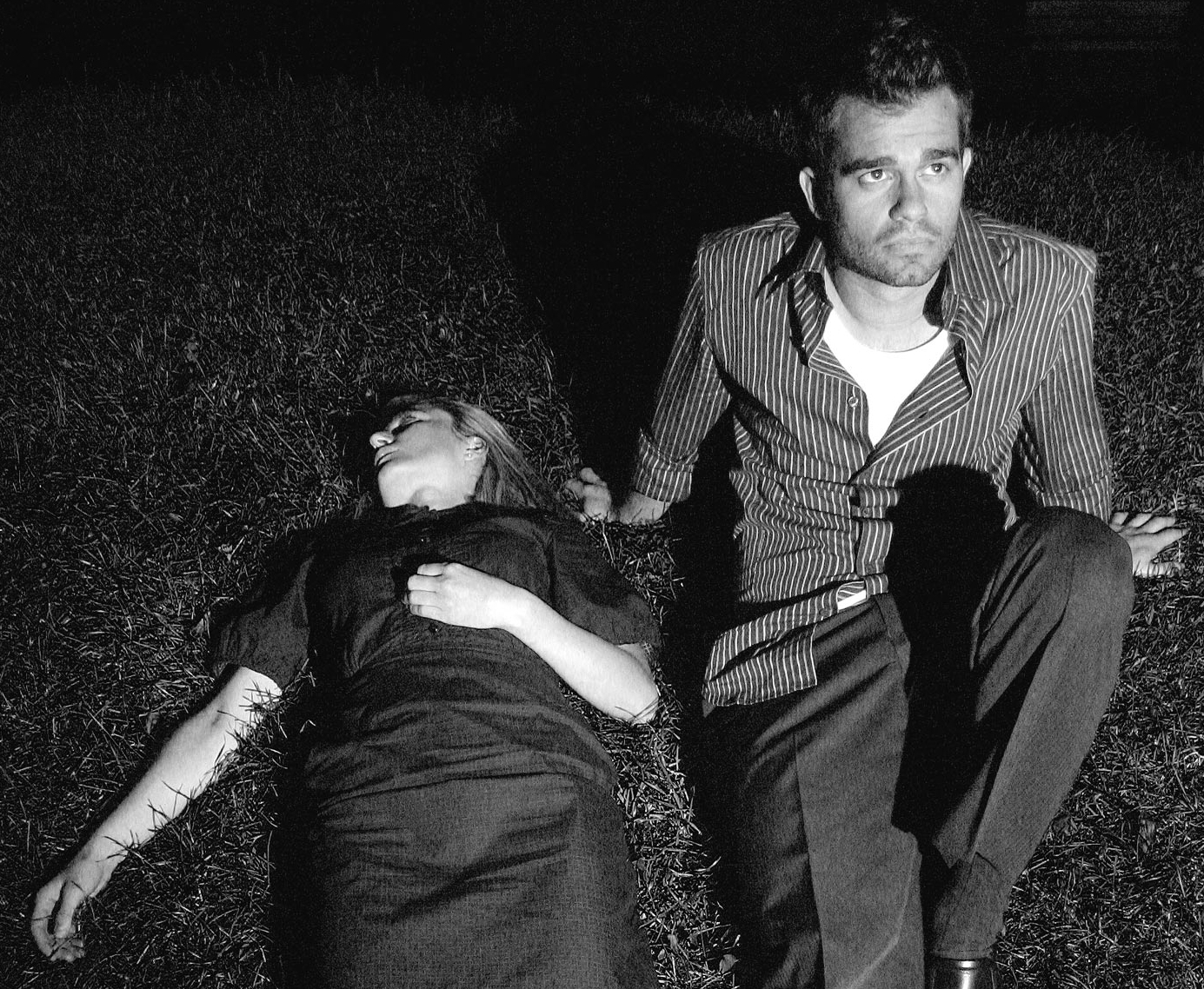
Throughout this time, Taylor was also beginning to develop as a director. At York, she directed three student written shows as part of the PlayGround Festival, including her own play Carolyn, about a complicated Southwestern Ontario family with a catatonic mother. At the 2008 Toronto Fringe, she directed two shows written by fellow York grads and later that year, she travelled with a production of George F. Walker’s Theatre of the Film Noir through Poland and Austria as the show’s assistant director. In 2009, she directed her first professional production entitled The Weeping Salsa by Vladimir Jon Cubrt which received rave reviews.
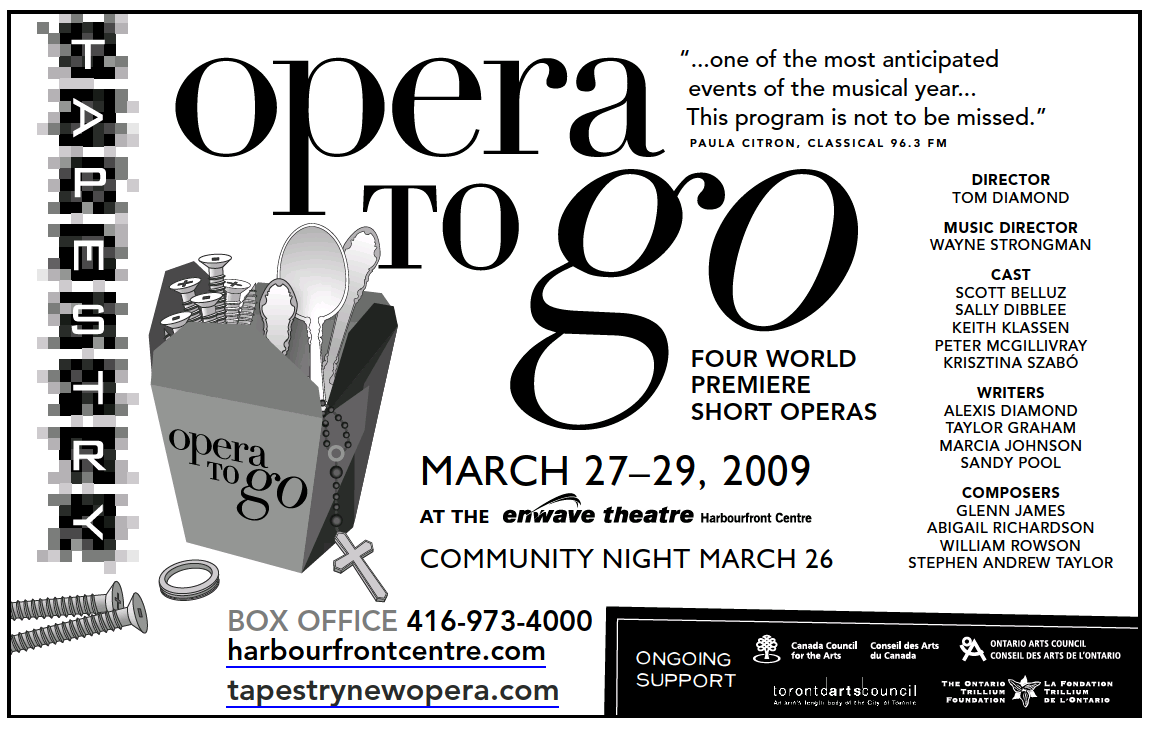
As a writer, Taylor established herself as a bright young talent even before she graduated from York. She was accepted into Tapestry New Opera’s Librettist / Composer Lab and Tapestry produced four of Taylor’s operas between 2007-8. In this program, Taylor was able to play with poetic forms, learn from established writers like Marcia Johnson, and collaborate with well respected composers. Notably, her one act opera The Virgin Charlie created with composer William Rowson and produced by Tapestry at the Enwave Theatre at the Harbourfront Centre. The Toronto Star called the opera “charmingly twisted” (Terauds) and NOW Magazine praised the productions “skillful blend [of] dramatic and musical tones” (Kaplan). The Virgin Charlie was then nominated for a Dora Award for Best Opera/Musical!
2010-2015
2010-12, Taylor worked with her good friend from York, Matt Drappel, to create Late Night with Matty D —a late night comedy show which ran for two seasons on Rogers Television. As the show’s director, Taylor worked with Matty to develop his show monologues, book show talent, and organize the crew on the day of the filming. The show only ended because Matty won Sportnet’s reality show Gillette Drafted in 2013.
Taylor also happily helped launch Kat Sandler’s playwrighting career as she was the producer of her Kat’s first show Love Sex Money which was independently produced at the Factory Theatre. Plus, Taylor learned more vital producing and artistic lessons as an intern at Canadian Stage and researcher at the Playwrights Guild of Canada in 2011.
She continued to branch out in her theatre directing style as she directed Orpha and Beatrice, a fairy tale puppet opera, and Six & Eight, which incorporated swing dance as a form of expression throughout.


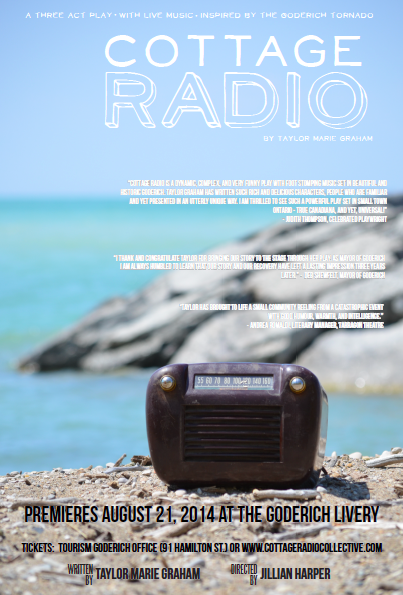
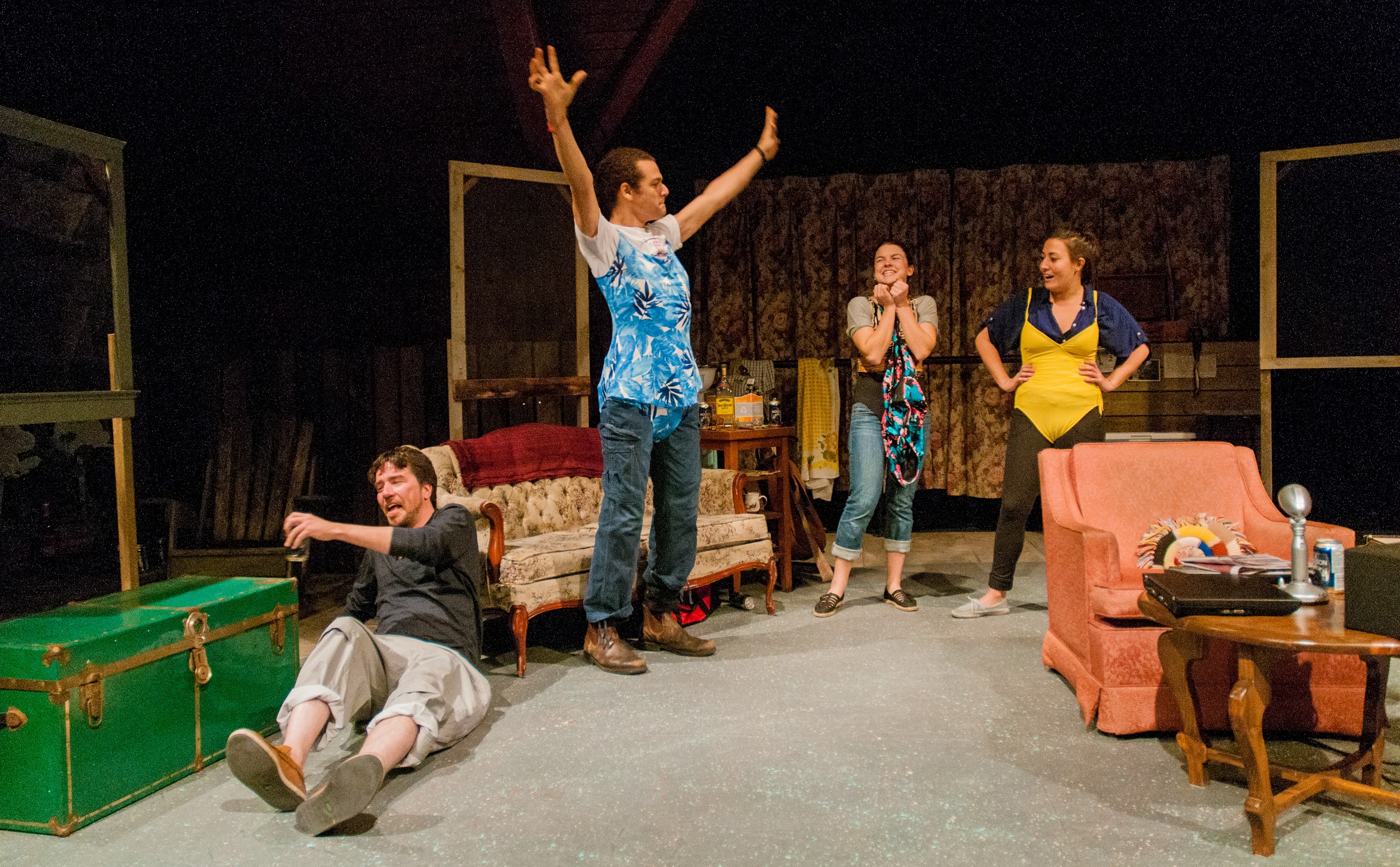
In 2012, Taylor was accepted to the University of Guelph’s prestigious MFA in Creative Writing program where she received the Connie Rooke Scholarship. Run by some of the most notable writers in Canada, in this MFA program Taylor was able to work with Catherine Bush, Michael Winter, Dionne Brand, Andrea Romaldi, and Judith Thompson, who particularly became a great mentor to Taylor over the years. Thompson, who has won every Canadian theatre award there is to win, was Taylor’s advisor as she completed her thesis play Cottage Radio inspired by the events of the 2011 Goderich tornado.
Thompson describes Taylor’s play Cottage Radio as, “a dynamic, complex, and very funny play with fabulous music set in beautiful and historic Goderich. Taylor Graham has written such rich and delicious characters, people who are familiar and yet presented in an utterly unique way. I am thrilled to see such a powerful play set in small town Ontario – true Canadiana, and yet, universal!” Thompson also named Taylor as the up and coming playwright to watch in Playwrights Guild of Canada’s The Playwright Applause campaign. Cottage Radio was performed in Goderich at the Livery Theatre and at Alumnae Theatre in Toronto. Former San Francisco journalist Bill Mandel called Cottage Radio “searingly written. . . a significant accomplishment!”

While completing the MFA program, Taylor also began her journey as an educator. She tutored students at Humber College Lakeshore Writing Centre for two years and then began teaching communications and rhetoric classes at Humber College and Sheridan College.
2015-2020
At Sheridan College, Taylor enjoyed teaching students from a variety of disciplines and with a number of different interests. In this time, Taylor learned a great deal from the students in her classes. In the English department, she taught classes in modern literature, the graphic novel, Greek mythology, detective fiction, folk and fairy tales, life writing, introduction to the short story, plus communication and rhetoric classes.
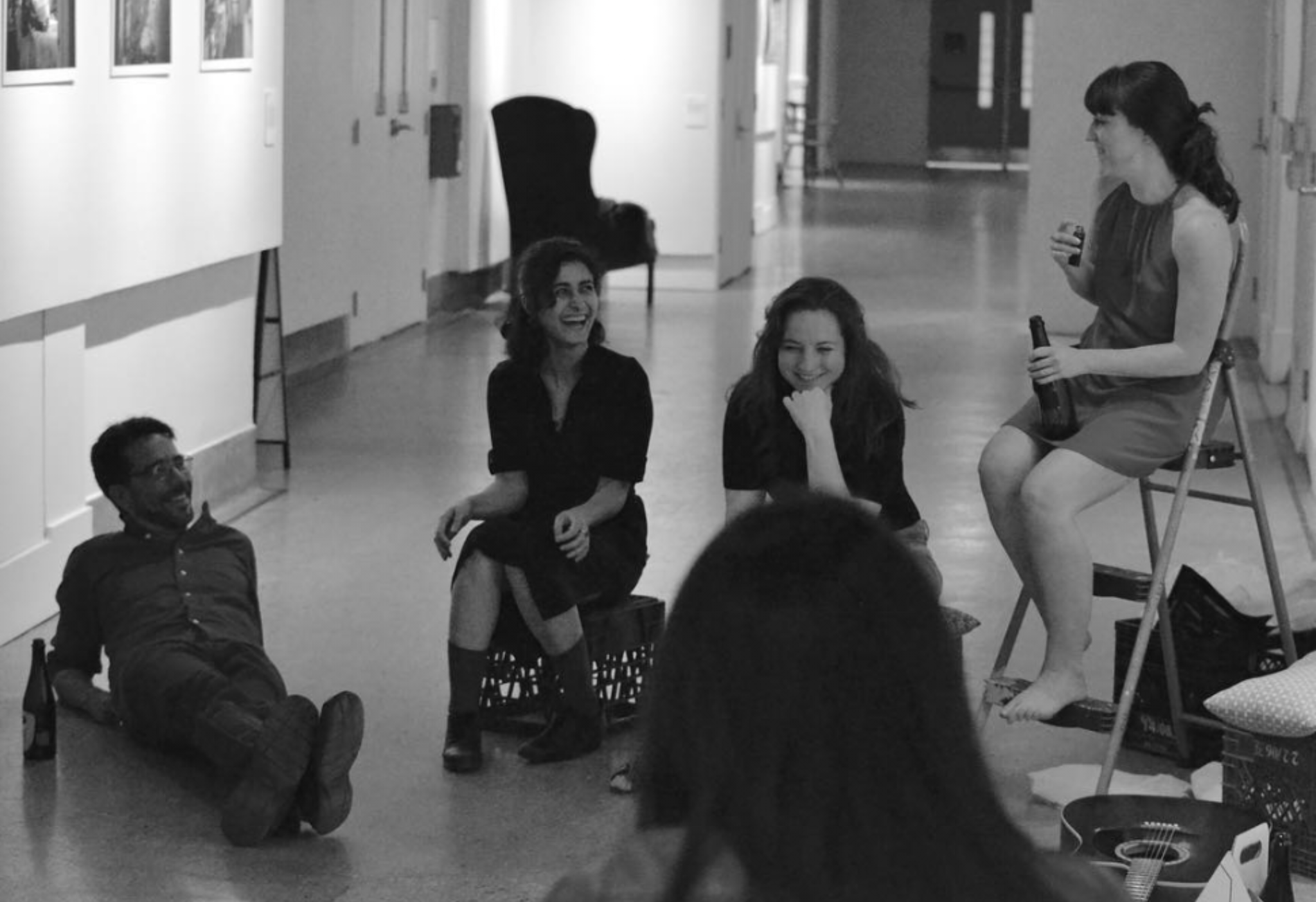
Taylor’s indie comedy, White Wedding premiered summer 2017 at the Artscape Youngplace in Toronto. This site specific piece had the audience sit in the upstairs hallway of an old high school turned art gallery. Mooney on Theatre said White Wedding was a “site specific piece that used its space to its advantage. The show explores unrequited love, the ways in which nostalgia can affect our choices and memories, and whether or not love actually conquers all . . . If you’re looking for a unique, lively evening, please come check out this show” (Mahoney).


In 2017, Taylor was accepted to the University of Guelph’s Doctoral Program in Literature and Theatre Studies in English. She took courses in Canadian Theatre Histiography with Dr. Alan Filewod, Canadian Theatre Theory & Identity with Dr. Ann Wilson, Performance & Media Studies with Dr. Mark Lipton, Rural History with Dr. Catherine Wilson, Indigenous Women and Literature with Dr. Christine Bold, Core Concepts in Improvisation with Dr. Daniel Fischlin, and Devised Theatre Creation with Judith Thompson. As a Teaching Assistant, Taylor supported Effective Writing, Intro to Performance, Reading the Contemporary World, Writing for Performance, Elements of Creative Writing, Contemporary Cinema, Children’s Literature, and Shakespeare. Scholarships and awards she has received throughout her studies include the Carole Steward Arts Graduate Scholarship, the Graduate Entrance Excellence Scholarship, the College of Arts Graduate Scholarship, and the Ontario Government Scholarship.
At the start of the PhD program, Taylor bought a yellow brick house from 1880 in Cambridge, Ontario, and married her husband Ger in their backyard the following summer. They love walking along the Grand River with their dog Winston or biking the Cambridge to Paris rail trail when the weather is just right.
Shortly after arriving in the Waterloo Region, Taylor started also working with regional artists including a women’s playwright unit where she met collaborators Deanna Kruger, Nicole Smith, and Terre Chartrand. She travelled to Newfoundland to participate in the Women’s Work Festival in St. John’s. She also began working with one of the region’s notable theatre companies, MT Space by participating in their 2019 IMPACT Festival.
2021-2024
Throughout the Covid-19 pandemic, Taylor spent her time writing new plays, working on her PhD dissertation, and teaching online. The first course she taught at a university was the online course Literature in History at the University of Guelph. She has since taught in person courses at the university level including Introduction to Theatre at the University of Waterloo and four courses at Western University: Post-Pandemic Theatre, Reviewing Performance, Toronto Culture and Performance, as well as Theatre, Ghosts, and the Southwestern Ontario Gothic. Taylor is known for her interactive style as a professor and bringing in a variety of learning opportunities including meeting the artists behind the works examined.
Taylor also began working with the Canadian Association for Theatre Research throughout the pandemic. She first volunteered for the financial committee and then joined the board where she served for two years as the graduate representative and the Communications Officer. She also served on the organizing committee of Utopias, a graduate conference at the University of Guelph which notably paid all its participants, including the graduate students.
Taylor has presented research at a number of conferences including the Canadian Association for Theatre Research Conferences 2021-5, the University of Toronto’s FOOT Conferences 2021-24, Queen University’s Graduate Conference in Literature 2021, the Sexuality Studies Conference 2022, Utopias Graduate Conference 2021, University of Guelph’s Rural History Roundtable 2019, University of Guelph’s International Women’s Day Conference 2019, Sheridan Creates 2016, and the International Federation for Theatre Research Conference 2022. She also enjoys talking about her research with community organizations such as the Pickering Historical Society, the Goderich Salt Festival, the Blyth Festival Board Retreat, and the Huron County Museum.

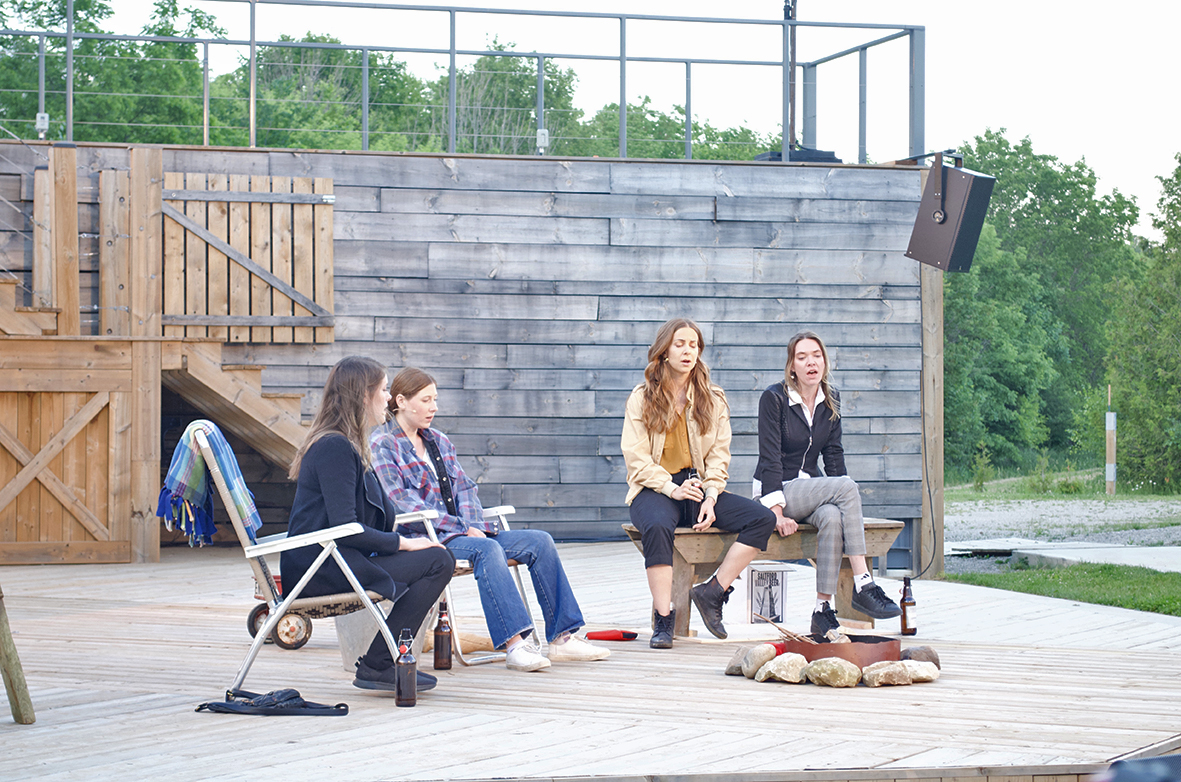

Her 2021 play Post Alice received considerable critical acclaim. When it premiered at the Here For Now Theatre Festival in Stratford, Ontario, reviewer Lynn Slotkin noted, “Taylor Marie Graham has written an arresting and funny play about women and their friendships, coping with a troubled past and supporting each other”. Reviewer Joe Szekeres described, “‘Post Alice’ [as] one of those plays that needs to be discussed later to see how others respond to such fine work. Outstanding and true ensemble work”. Christopher Hoile‘s 5 star review called Post Alice “one of the most exciting new Canadian plays I’ve seen for some time . . . What is so masterful about Graham’s play is how in only an hour she uses the simple reunion of four friends to open up a contemplation of enormous themes . . . This is a profound, beautifully crafted play”.
Post Alice was recognized by the Waterloo Regional Arts Awards in 2021 and went on to be performed as part of the Alice Munro Festival on the Blyth Festival Theatre stage in 2024. You can now find the play published in Taylor’s anthology of plays Cottage Radio & Other Plays: Cottage Radio, White Wedding, & Post Alice by Talonbooks.
Summer 2022, Taylor travelled to Caithness, Scotland, to the Lyth Arts Centre on an international playwright residency to start work on a new play called Burn of Lyth about rural women and environmental activism supported by the Canada Council of the Arts and the Waterloo Region Arts Fund.
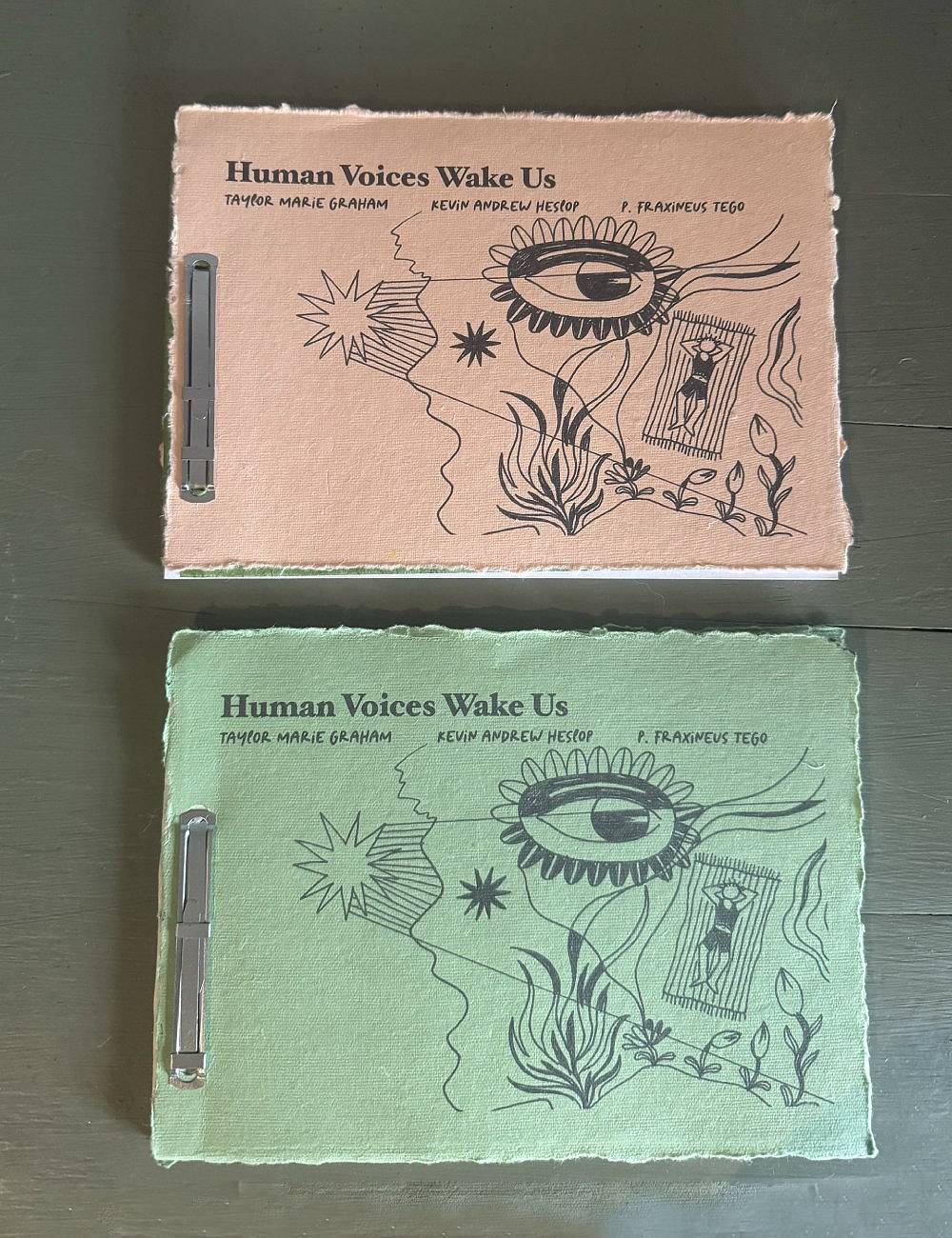
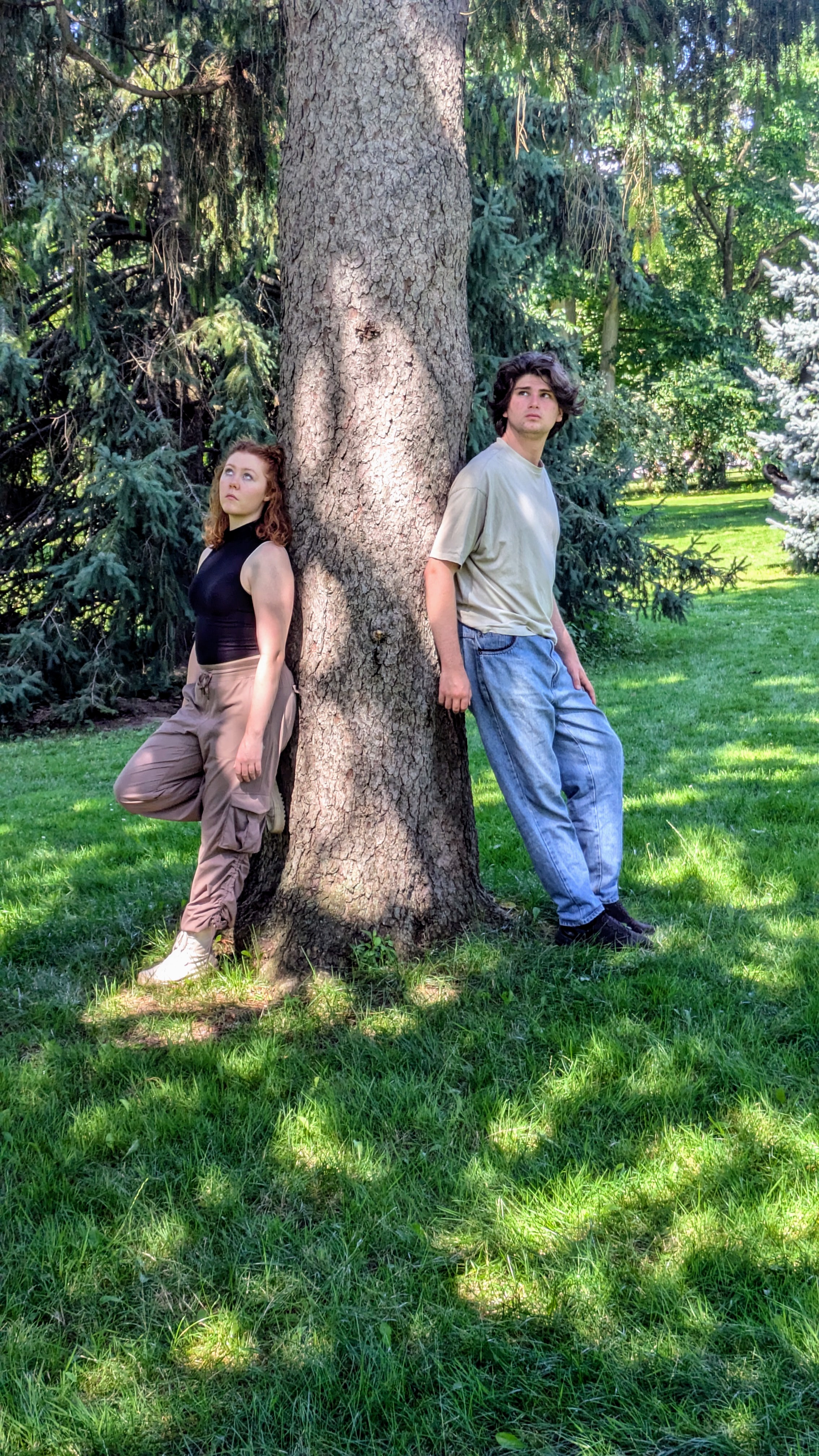

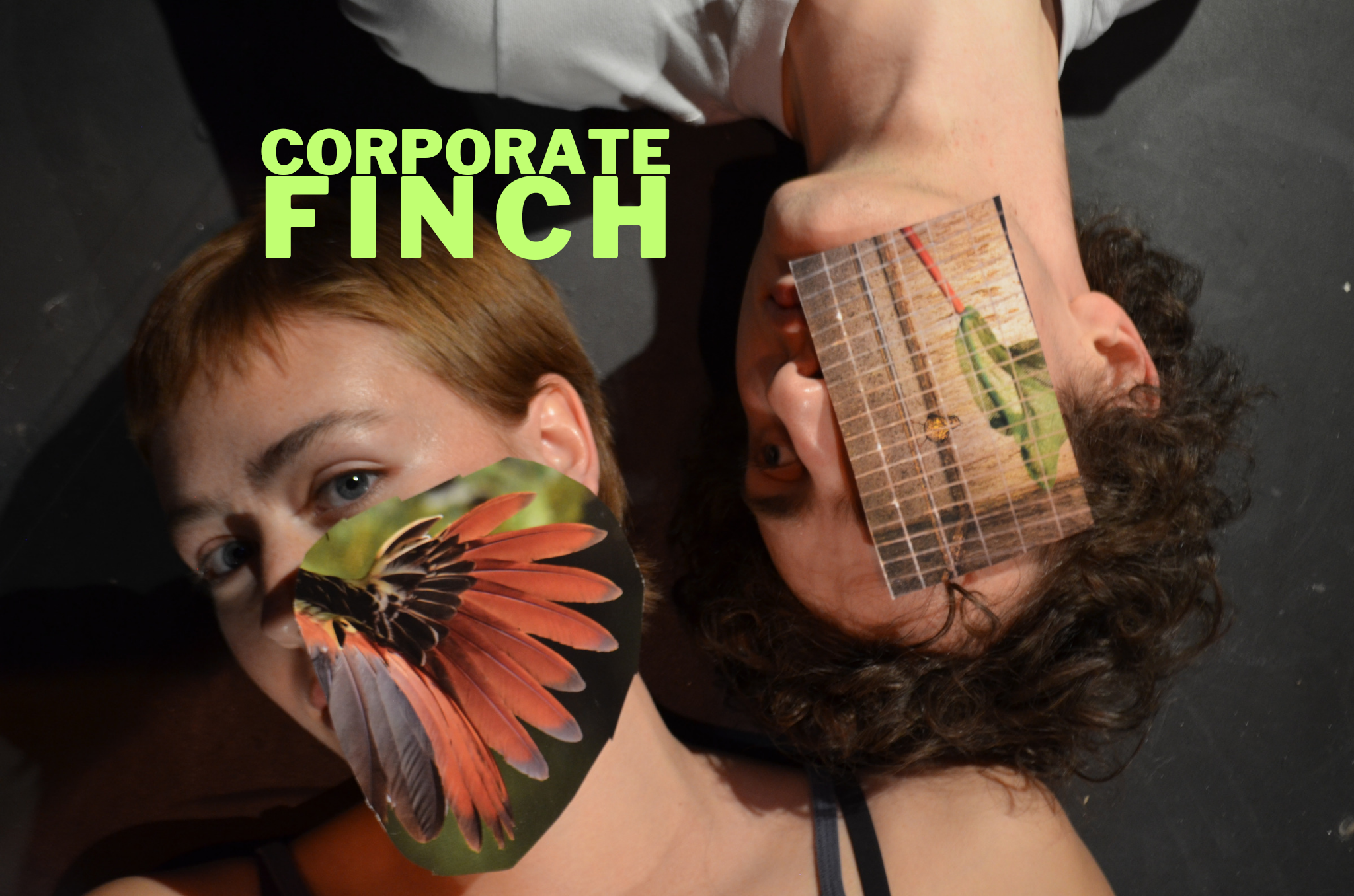
At the end of summer 2022 Taylor wrote a one act thriller as part of Flush Ink Production’s 22 hour writing contest. This creepy little play, Corporate Finch, had a workshop production December 2022 and then toured throughout Ontario summer 2023. Audiences and critics came out in droves, calling Corporate Finch “a dark, weird little play, by turns psychological, theological, and ornithological” (Our Theatre Voice), “a tender, disturbing mediation on youthful connection and the precarious phenomenon of trust” (Istvan Reviews), “a show you simply have to see” (View From the Box), “a dramatic tale that slowly evolves and grips us on the way” (Slotkin), “a moody, twisty drama from playwright Taylor Marie Graham . . . the highlight of our first day at Fringe” (My Entertainment World), and a “grisly two-hander by playwright Taylor Marie Graham [that] is well-performed and well-directed” (Toronto Star). Corporate Finch was remounted in Edmonton summer 2024 and is now included in Rosegarden Press’ Anthology Human Voices Wake Us.
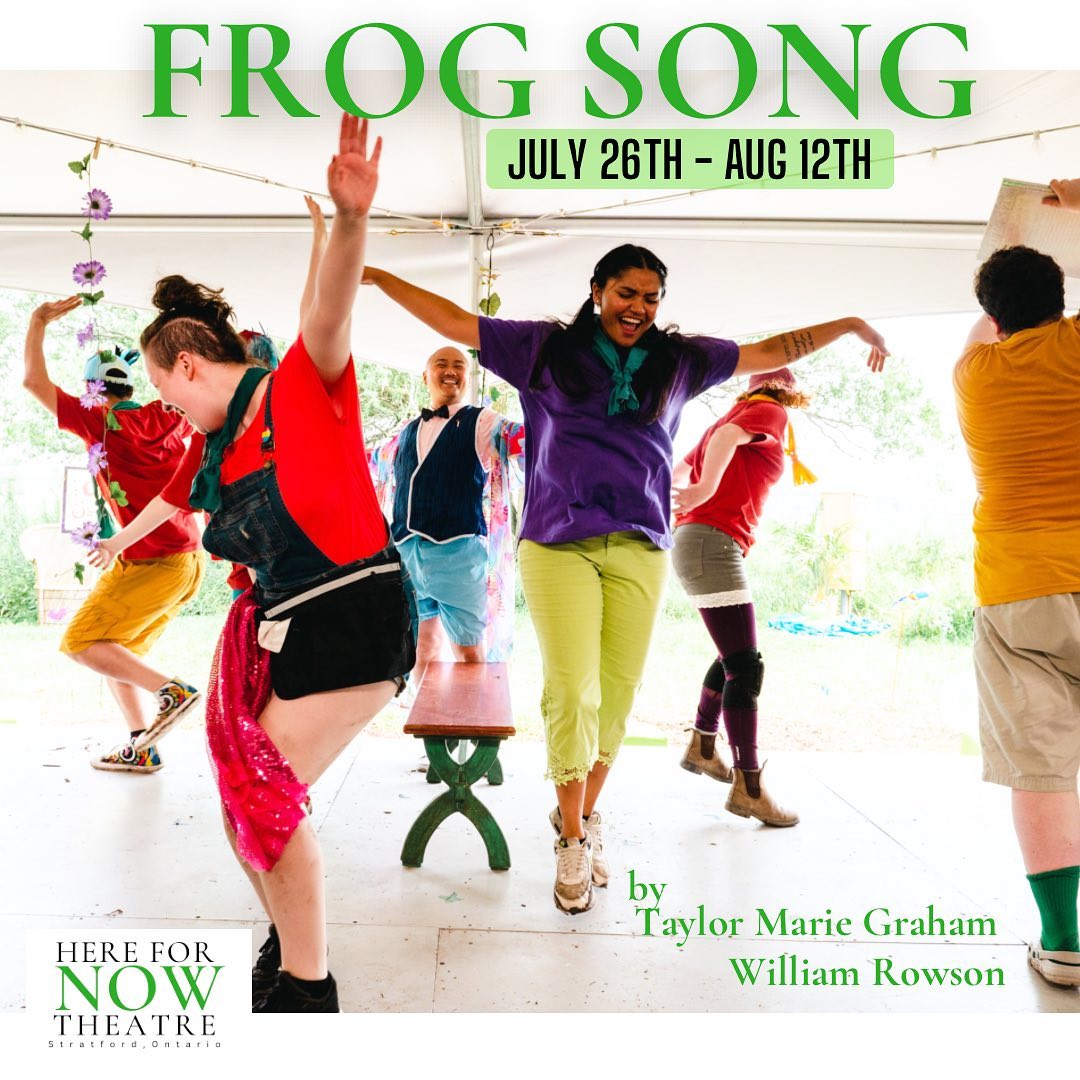

Summer 2023, Taylor and composer William Rowson’s opera for children Frog Song premiered at Here For Now Theatre with the Stratford Symphony. Reviewers called it “charming, sweet, funny, & thoughtful” (Slotkin), “meaningful for all ages” (Intermission), and “an all too rare opportunity to introduce pre-teens to the special magic that is opera” (OntarioStage).
Taylor has written articles which can be found in Canadian Theatre Review, Intermission Magazine, Routledge’s Journal of Applied Theatre and Performance, The Conversation, Theatre Research in Canada, Guernica Editions, and Canadian Literature.
Only a few months after graduating from her PhD, Taylor was offered and accepted an assistant professor appointment at Bishop’s University in Sherbrooke, Quebec. Throughout the 2025-2026 year, she’ll be teaching playwrighting, directing, dramaturgy, and theatre history courses. Plus, she is currently working on a new draft of her play Burn of Lyth and a creative non-fiction novel set in Southwestern Ontario.
 TAYLOR MARIE GRAHAM